A motor that runs around the clock must be matched to its duty, load, cooling conditions, starting method and control system—not selected from horsepower alone. By the end, you will have a practical checklist for sizing a WEG motor, comparing it with alternatives, and verifying whether the quoted model can handle your process safely and economically.
Key takeaways
- Confirm S1 rating, rated output and cooling at thermal equilibrium.
- Size the motor from load torque, speed, duty cycle and starting demand.
- Match direct-on-line, star-delta, soft starter or VFD control to the load.
- Verify frame, shaft, mounting, voltage, frequency, enclosure and protection before ordering.
What makes a WEG motor suitable for continuous S1 duty?
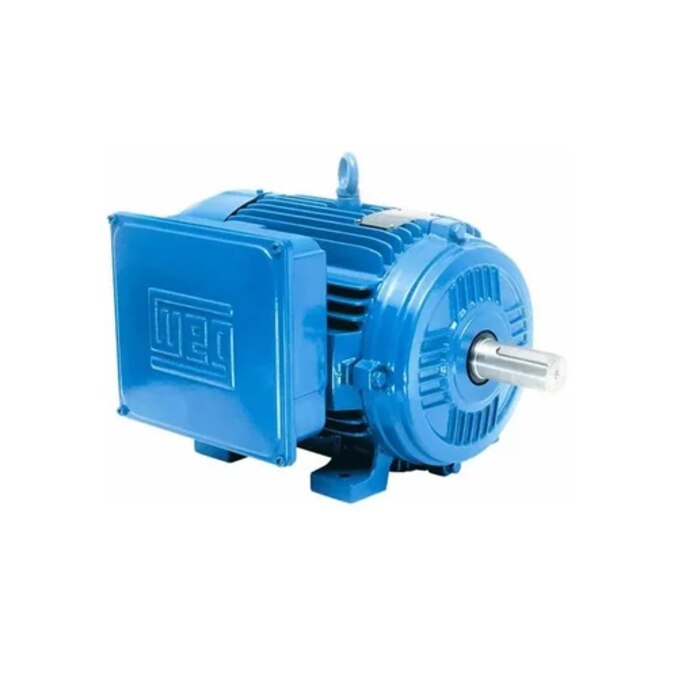
A WEG electric motor suits continuous duty S1 when its rated output and cooling system keep the winding temperature within the manufacturer’s limit after the motor reaches thermal equilibrium.
IEC duty type S1 describes a constant load lasting long enough to stabilise temperature; it does not approve unlimited overload, speed, ambient heat or every VFD operating point.
Confirm the thermal margin from the exact model documentation:
- Match the nameplate voltage, frequency, rated current, speed, mounting position and output to the intended operating point.
- Check the rated ambient temperature and maximum installation altitude. Apply the manufacturer’s derating when site conditions exceed those values.
- Read the declared temperature rise, not only the insulation class. Class F insulation has a 155°C thermal-class limit, but a motor designed for Class B temperature rise runs cooler and retains more thermal margin.
- Verify that the cooling arrangement remains effective at the actual speed, especially with a VFD. A self-ventilated motor can overheat at low speed under constant-torque load.
- Check the overload requirement, starts per hour and acceleration time against the datasheet rather than relying on a nominal service factor.
A continuous process needs a genuine S1 rating, not an intermittent S2, S3, S4 or S5 rating applied to an around-the-clock load. For heavy-duty motor applications, monitor winding temperature or use the motor’s thermal protection during commissioning; a rising temperature trend signals inadequate cooling, excessive load or incorrect drive settings before insulation damage occurs.
How do you size the motor for the driven machine?
Match motor sizing to the driven machine’s maximum shaft power and torque demand at its actual speed, not to a horsepower label alone. A motor with enough running power can still stall if its starting torque is too low or if the machine’s inertia demands excessive acceleration torque.
Calculate shaft power from torque and speed: P(kW) = T(N·m) × n(r/min) ÷ 9,550. Compare the motor’s rated torque with continuous load torque, peak load torque and the torque required throughout acceleration.
Choose the duty point as follows:
- Pumps: use the operating point on the flow–head curve and allow for impeller changes, fluid density and overload at the end of the curve.
- Fans: size for maximum airflow and static pressure; fan power rises sharply with speed.
- Compressors: check discharge pressure, unloaders, compression stages and restart torque.
- Conveyors: include belt friction, incline, material buildup, acceleration time and loaded restarting.
- Crushers: use the peak breakaway torque and flywheel inertia, not average power.
- Mixers: include viscosity changes, batch weight, startup torque and prolonged low-speed operation.
For a geared drive, size the gearbox separately from the motor. Verify required output torque, gearbox service factor, radial and axial shaft loads, duty cycle, starting frequency, thermal capacity, backlash and any backstop requirement.
Finally, include altitude, ambient temperature and driven-machine inertia in the calculation; these can reduce available output or lengthen acceleration.
Which starting and speed-control method fits the load?
Direct-on-line starting suits a robust supply and a load that tolerates full starting torque and high inrush current. Choose reduced-voltage starting when the supply cannot accept that current, or when acceleration must be gentler.
| Option | What it does | When it fits |
|---|---|---|
| Direct-on-line starting | Applies full line voltage; highest inrush and starting torque | Small enough supply, short acceleration, and a load that accepts mechanical shock |
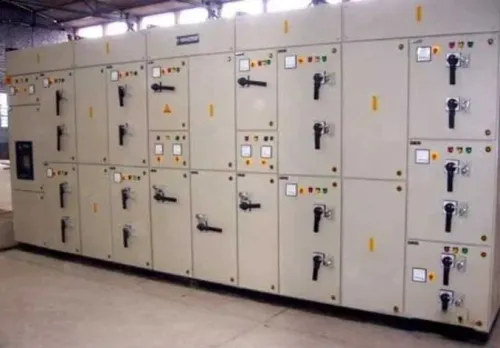
| Star-delta starter | Starts in star, then changes to delta; reduces starting current and torque | Motor has six accessible leads, is rated for delta at line voltage, and the load starts lightly |
| Soft starter | Ramps voltage during starting and stopping; it does not regulate running speed | Pumps, fans and conveyors needing less shock or water hammer, without variable-speed operation |
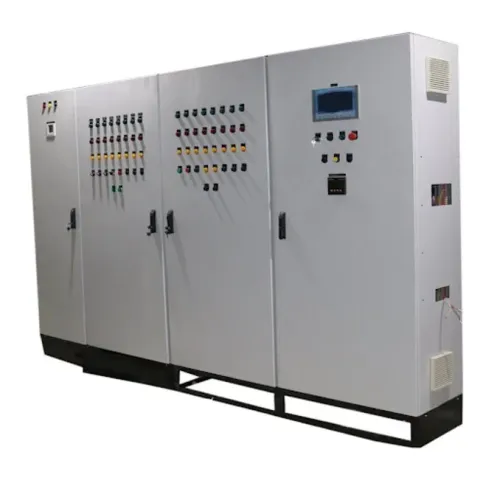
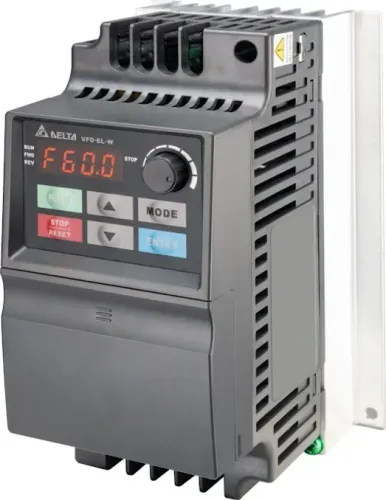
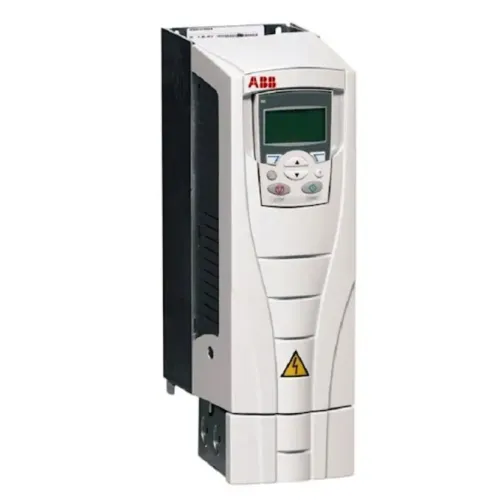
| VFD motor with a VFD | Varies frequency and voltage for controlled speed, torque and acceleration | Processes needing speed control, frequent starts, or reduced flow without throttling |
Before connecting, check:
- Compare supply voltage, frequency, phase count and motor nameplate connection with the starter or VFD output.
- Confirm full-load current, overload-setting range, short-circuit protection and cable size.
- Check that starting torque will accelerate the machine and that the drive suits its inertia.
- Verify earthing, rotation, ambient temperature and enclosure requirements.
- For a VFD motor, confirm insulation suitability, minimum speed cooling, maximum speed, cable length and bearing-current protection.
- Set acceleration and deceleration; a high-inertia or overhauling load can regenerate energy and trip the VFD unless you add braking equipment or extend the ramp.
How do efficiency, enclosure and protection affect the choice?
Efficiency class is only a starting point. Compare motors at the same rated output, speed, frequency, voltage, measurement method and supply waveform; VFD operation changes losses from the sinusoidal test condition.
| Class | What it indicates | Selection point |
|---|---|---|
| IE2 motor | Standard efficiency tier | Consider where purchase cost dominates and annual running hours are low |
| IE3 motor | Higher efficiency than IE2 | Strong default for long-hour, lightly variable operation |
| IE4 motor | Higher efficiency than IE3 | Evaluate when running hours and energy savings justify the premium |
IE3 or IE4 does not guarantee lower installed-system consumption. Check these conditions before deciding:
- Load profile and oversizing
- Voltage imbalance and harmonic current
- VFD losses and time spent below rated speed
- Gearbox efficiency and actual operating hours
For continuous S1 operation, confirm that the selected motor reaches thermal equilibrium without exceeding its winding limits at the actual ambient temperature, altitude and speed. A nameplate efficiency figure does not cover every VFD operating point.
An IP55 enclosure limits harmful dust entry but is not dust-tight; its water rating covers jets, not immersion. Washdown, corrosive chemicals, conductive dust or outdoor exposure can require a different enclosure and added protection.
A general-purpose enclosed motor is not automatically safe in an explosive atmosphere. Match hazardous-area certification to the zone, gas or dust group, protection concept and temperature class.
Evaluate bearing life against radial and axial shaft loads, belt tension, coupling alignment, speed and grease intervals. Add compatible PTCs, thermistors or RTDs where overload protection cannot detect ventilation loss, locked rotor, phase loss or bearing overheating.
What should you verify before ordering a WEG replacement?
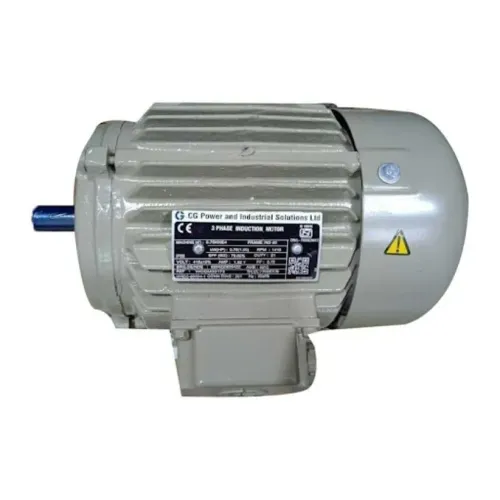
A motor replacement is interchangeable only when its electrical, mechanical and thermal details match. Start with the WEG motor model number and photograph the motor nameplate before requesting a quotation.
- Record rated output in kW, rated current, voltage, frequency, speed, pole count, efficiency class, power factor, insulation class, duty rating, enclosure IP code and ambient-temperature limit.
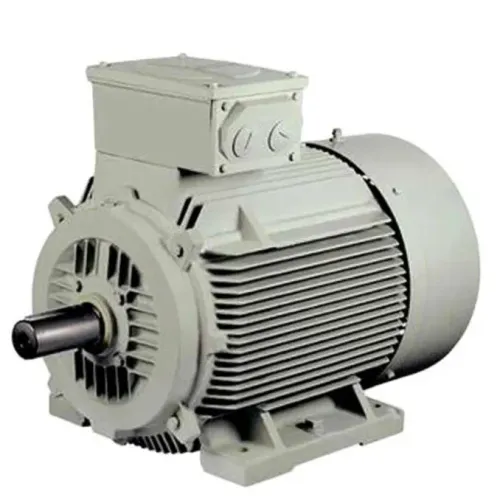
- Confirm frame size, shaft diameter and length, keyway, foot or flange mounting, terminal-box position, rotation, brake, encoder and bearing arrangement.
- Request the datasheet, dimensional drawing, efficiency test data, wiring diagram, operation manual and certificate for hazardous-area use when applicable.
- Give the supplier altitude, ambient temperature, ventilation space, supply type, VFD model, starting method, load inertia, acceleration time and starts per hour.
| Comparison | What to match | What can go wrong |
|---|---|---|
| WEG, Siemens, Havells, LEDL or ABB | Rated current, speed, frame, mounting, shaft dimensions and duty—not only kW | A physically similar motor can overload the drive or fail to fit |
| 415 V 50 Hz motor on direct supply | Voltage, frequency, connection, current and rotation | Incorrect star-delta links can cause low torque or excessive current |
| Motor on a VFD | Rated current, overload profile, minimum speed, cooling and insulation suitability | A horsepower-matched drive can be undersized for high breakaway torque |
| Geared motor | Output torque, ratio, service factor, radial and axial loads, backlash and backstop | Adequate motor kW cannot rescue an undersized gearbox |
Perfect Engineering Solutions can use these records to compare a WEG quotation with an existing Siemens, Havells, LEDL or ABB installation without guessing from horsepower.
Frequently asked questions
What makes a WEG motor suitable for continuous S1 duty?
Its rated output and cooling system keep winding temperature within the manufacturer’s limit after thermal equilibrium.
How do you size a WEG motor for the driven machine?
Match motor power and speed to the machine’s torque, load profile, duty cycle and starting requirements.
Which starting and speed-control method fits the load?
Choose direct-on-line, star-delta, a soft starter or a VFD according to starting current, torque and speed-control needs.
How do efficiency, enclosure and protection affect motor choice?
Compare efficiency class, cooling method, IP rating, insulation, ambient conditions and protection against overload or moisture.
What should you verify before ordering a WEG replacement?
Check the nameplate, frame size, shaft dimensions, mounting arrangement, voltage, frequency, speed, enclosure and terminal configuration.