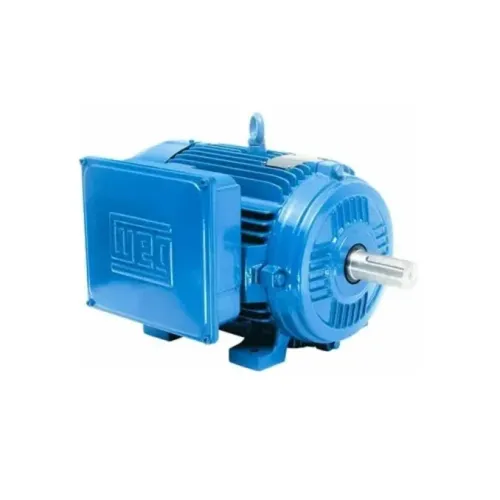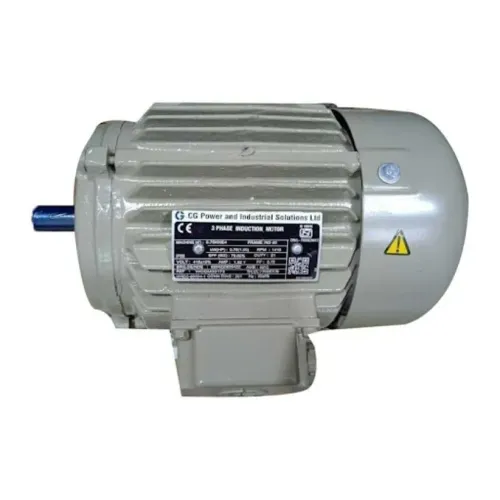
Choosing a Siemens motor by horsepower alone can leave a pump short of head, a compressor unable to start, or a conveyor unable to break away from a loaded belt. You will be able to calculate the required power, torque and speed, check the nameplate and supply, and decide whether a gearbox or VFD belongs in the drive system.
Key takeaways
- Calculate shaft power from the machine’s actual load and duty cycle.
- Match motor poles, speed and gearbox ratio to the driven machine.
- Check voltage, frequency, frame size, shaft dimensions and mounting before ordering.
- Set VFD current, cooling, cable length and braking parameters correctly.
Start with shaft power, torque and the machine’s operating load
Size the motor from required shaft power, motor torque, speed and operating load—not horsepower alone. For a pump, calculate power from flow, total head and pump efficiency; for a compressor, use pressure, flow and duty cycle; for a conveyor, include belt force, slope, acceleration and friction.
Apply the service factor to the calculated worst-case load, not to an arbitrary motor rating.
At 50 Hz, a four-pole motor has a synchronous speed of 1,500 rpm, but its rated running speed is lower because slip increases under load. Use the nameplate rated speed when calculating delivered torque and machine speed.
A geared motor must match required output torque and output speed, starting or breakaway torque, duty cycle, radial and axial shaft loads, mounting position and gearbox thermal rating. A reduction ratio alone does not guarantee conveyor or pump speed: slip, VFD frequency, gearbox efficiency and other transmission ratios change the result.
For a practical Siemens motor selection, verify:
- Supply voltage and frequency, including whether the available Indian three-phase supply suits a 415 V or 440 V nameplate
- Rated current, kW, power factor, efficiency and IE efficiency class
- Insulation class, temperature rise, duty rating, enclosure or IP rating, ambient temperature and altitude
- Permissible starts per hour and starting method
If a VFD controls the motor, enter its rated voltage, current, frequency, speed and power factor. Compare required acceleration torque and motor current with the drive’s heavy-duty rating for conveyors, crushers and high-breakaway loads. Prolonged low-speed constant-torque operation can require separate ventilation, thermal sensors or a speed-torque derating curve.
Match motor speed, poles and gearbox ratio to the driven machine
Choose poles by the machine’s required shaft speed: a two-pole motor suits high-speed loads, a four-pole motor suits medium-speed operation, and a six-pole motor suits lower-speed, higher-torque applications.
The practical distinction is synchronous speed versus rated speed: at 50 Hz, magnetic speed is 3,000, 1,500 and 1,000 rpm respectively, while slip makes the running speed lower.
| Pole choice | Synchronous speed at 50 Hz | Typical use |
|---|---|---|
| Two-pole motor | 3,000 rpm | High-speed pumps, fans and compressors |
| Four-pole motor | 1,500 rpm | General pumps, conveyors and process machinery |
| Six-pole motor | 1,000 rpm | Low-speed conveyors and high-starting-torque loads |
- Calculate the required machine rpm, then compare it with the motor’s rated rpm rather than its synchronous speed.
- Divide motor rated speed by the gearbox ratio to estimate output speed, then include any chain, belt or coupling ratio.
- Request rated output speed and output torque at the intended load point; the nominal ratio ignores slip, VFD frequency, gearbox efficiency and transmission losses.
- Select the geared motor from output torque, starting torque, duty cycle, radial and axial shaft loads, mounting position and thermal rating—not motor kW alone.
A VFD can adjust speed, but it does not make unlimited overspeed safe. Above base frequency, torque falls in field weakening; bearing speed, fan noise and mechanical stress rise. Keep maximum frequency within the motor, gearbox and machine limits. At prolonged low speed, shaft-mounted cooling falls, so check derating, thermal sensors or separately ventilated cooling.
Check the supply, nameplate and mechanical fit before ordering
Confirm the actual three-phase supply before ordering: voltage, 50 Hz frequency, phase sequence and available fault current. A 415 V motor and a 440 V motor are not interchangeable by label alone; compare the supply tolerance with the motor nameplate voltage and rated current.
| Check | Verify on the motor nameplate or drawing | Why it matters |
|---|---|---|
| Supply | Voltage, frequency, connection and rated current | A 400/690 V Δ/Y motor uses delta at 400 V and star at 690 V; connecting it in star to 400 V sharply reduces torque |
| Performance | kW, rpm, duty, efficiency class, power factor, efficiency, insulation class, temperature rise and permissible starts per hour | A mismatch causes overheating, nuisance trips or inadequate starting |
| Environment | IP55 motor rating, ambient-temperature limit, altitude, cooling method and hazardous-area marking | IP55 limits dust and water ingress; it does not approve the motor for an explosive atmosphere |
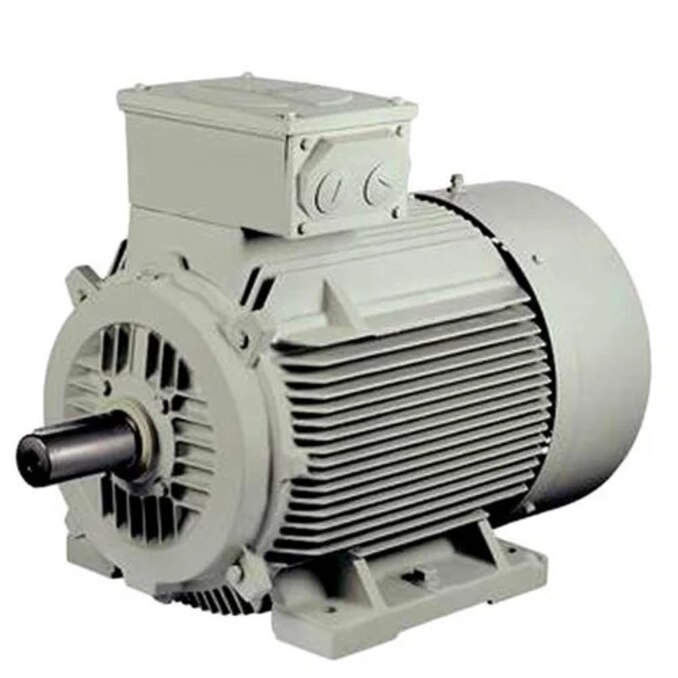
| Mechanical fit | IEC frame size, foot or flange mounting, shaft diameter, shaft length, key dimensions, mounting holes and terminal-box position | Equal kW and speed do not guarantee a drop-in replacement |
| Hazardous service | ATEX or IECEx zone, gas or dust group, temperature class, cable glands and protection concept | Every motor and accessory must match the classified area |
Measure the existing coupling, base and guard clearances. Do not assume an IEC motor fits a NEMA machine without checking every dimension. Also confirm rotation direction, cable-entry space and whether the terminal box can be repositioned.
Configure the VFD around current, cooling, cable length and braking
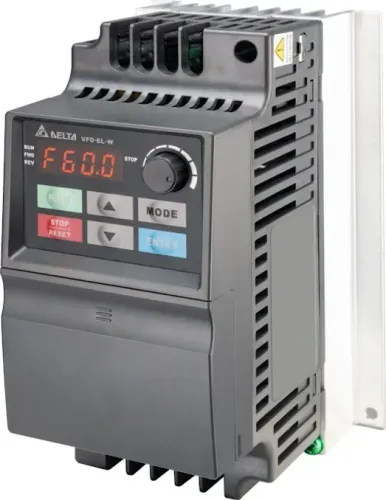
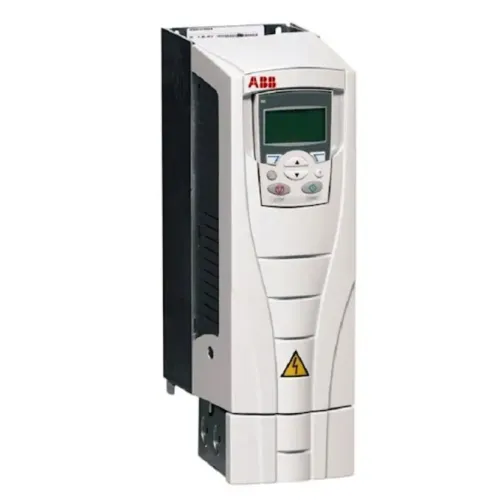
A VFD is suitable for a Siemens motor only when its duty-specific current and torque ratings exceed the application demand. Compare the motor’s rated current with the drive’s normal-duty rating for pumps and lightly loaded fans; use the heavy-duty VFD rating for conveyors, high-breakaway-load machines, crushers and positive-displacement compressors.
Check acceleration torque, not just motor kW.
Enter the motor nameplate values into the Siemens motor VFD:
- Rated voltage, current, frequency, speed and power factor
- Motor overload requirement and acceleration time
- Maximum permitted frequency and speed
- Ambient temperature, altitude and enclosure cooling conditions
Do not assume a motor is thermally safe because its kW matches the drive. At low speed, the shaft-mounted fan moves less air, so select separately powered motor cooling or limit torque when the load runs slowly. Above base frequency, torque falls in field weakening; remain within the motor, gearbox and driven-machine speed limits.
Confirm motor cable length against the drive manufacturer’s limit. Long runs increase reflected-voltage stress and leakage current; use the specified shielded cable, correct bonding, and an output reactor or dV/dt filter when required. Symmetrical shielding and shaft grounding reduce bearing fluting; larger motors may need an insulated bearing.
For high-inertia loads, lowering frequency does not by itself provide braking. Regenerated energy raises the DC-link voltage, so select a braking resistor or regenerative unit for braking power, pulse energy, duty cycle and the drive’s protection limits.
Turn the application requirements into a purchase-ready motor specification
Give the supplier one operating-point brief, not just a horsepower figure. A Siemens electric motor supplier needs enough information to coordinate the motor, gearbox and VFD around the same load, speed and starting conditions.
- Driven machine and duty: pump motor, compressor motor, conveyor or other equipment; continuous, intermittent or cyclic operation.
- Required output speed and torque at the shaft, including peak, breakaway and acceleration torque. Request rated output speed and torque under load, not only the nominal gearbox ratio.
- Geared motor selection data: service factor, duty cycle, radial and axial shaft loads, mounting position, thermal rating and available space.
- Motor supply: three-phase voltage, frequency, phase arrangement, available fault level and cable length. State whether the site supply is 415 V or 440 V at 50 Hz.
- Motor data: rated current, power factor, efficiency, IE class, insulation class, temperature rise, duty rating, IP enclosure, ambient temperature, altitude and permissible starts per hour.
- VFD requirements: normal-duty or heavy-duty rating, minimum and maximum speed, overload current, acceleration time, braking power and whether a resistor or regenerative unit is needed.
- Control strategy: minimum speed, unloading, bypass, lubrication or anti-surge protection for compressors and positive-displacement equipment.
Perfect Engineering Solutions can use this brief to compare a Siemens motor and drive package against the actual machine envelope. Check system efficiency under IEC 61800-9-2; an IE3 or IE4 motor rating alone does not establish VFD installation efficiency.
Related products
 | SIEMENS IE2 MOTOR ₹31390 WE HAVE WIDE RANGE OF PRODUCTS FOR SIEMENS IE4 MOTOR-SIEMENS IE3 MOTOR-SIEMENS IE2 MOTOR-1HP/1440RPM/FOOT MOUNTING/415VOLT/50HZ/VPI View product → |
 | SIEMENS IE2 MOTOR SIEMENS 180HP 6POLE FOOT MOUNTED MOTOR ₹2643436 Power (180 HP): This motor delivers approximately 134 kW of power, suitable for driving large industrial equipment like fans, pumps, or conveyors. View product → |
Frequently asked questions
How do you size a Siemens motor for a pump, compressor or conveyor?
Start with the machine’s required shaft power, torque and operating load. For pumps, use flow, total head and pump efficiency; for compressors, use pressure, flow and duty cycle; for conveyors, include belt force, slope, acceleration and friction.
How do motor speed, poles and gearbox ratio affect equipment selection?
Select the motor speed and pole count to suit the driven machine, then use the gearbox ratio to achieve the required output speed and torque. Confirm that the resulting torque meets starting and running loads.
What should you check before ordering an industrial motor?
Check the supply voltage and frequency, motor nameplate data, rated current, frame size, mounting arrangement, shaft diameter, shaft length, keyway and terminal-box position.
What VFD details must match the motor installation?
Configure the VFD for the motor’s rated current, voltage, frequency and speed. Also check cooling at low speed, motor cable length, earthing, electromagnetic compatibility and braking requirements.
What information belongs in a purchase-ready motor specification?
State the required power, speed, torque, duty cycle, supply, enclosure and protection rating, mounting type, shaft dimensions, gearbox ratio, VFD requirements and site conditions.
Related products
 | SIEMENS IE2 MOTOR SIEMENS 50HP 6POLE FOOT MOUNTED MOTOR ₹1028193 Siemens 50hp 6-Pole Foot-Mounted Motor This is an AC Induction Motor manufactured by Siemens, designed for robust industrial applications. View product → |
 | SIEMENS IE2 MOTOR SIEMENS 180HP 4POLE FOOT MOUNTED MOTOR ₹2335692 ⚙️ Siemens 180hp, 4-Pole, Foot-Mounted Motor: Key Features This motor is typically a low-voltage induction motor designed for robust industrial... View product → |
 | SIEMENS IE2 MOTOR SIEMENS 2POLE 270HP FOOT MOUNTED MOTOR ₹3117147 The Siemens 270hp (approx. 200 kW) motor is a heavy-duty industrial workhorse designed for high-speed applications. View product → |
 | Siemens Electric Motor 0.37 KW 0.5 HP Siemens IE2 MOTORS, 1500 rpm ₹6700 Power 0.37 KW Speed 1500 rpm Horsepower 0.5 HP Phase Three Phase No. View product → |