Choose the motor from the driven machine’s torque, speed, duty cycle and starting behaviour—not from a familiar horsepower number or gearbox label. By following the load calculation, speed, electrical, efficiency, protection and mounting checks below, you can specify a Crompton Greaves motor that fits the machine and performs reliably in service.
Key takeaways
- Calculate motor power from loaded torque and shaft speed.
- Match motor poles and gearbox ratio to the machine’s required speed.
- Verify supply voltage, starting method and VFD operating range.
- Compare efficiency, IP protection, duty rating and mounting dimensions before ordering.
Start with the Machine’s Torque, Speed and Duty
Begin with the driven machine torque at its working shaft and the shaft speed under load. Do not choose a motor from the gearbox nameplate kW alone. Calculate mechanical power with P = T × n ÷ 9550, where P is kW, T is torque in N·m and n is r/min.
Use this sequence for motor power selection:
- Record required running torque, operating speed and maximum transient torque.
- Calculate power at the normal operating point and at the worst credible load.
- Add gearbox losses when the motor drives through a reducer; output torque is approximately T₂ = 9550 × P₂ ÷ n₂.
- Check acceleration torque: motor torque minus opposing load torque must accelerate the machine within the required time.
- Match the thermal duty to IEC duty, such as S1 continuous or S3 intermittent periodic duty.
| Load profile | Power basis | Main risk |
|---|---|---|
| Constant torque | Use the highest sustained torque | Undersizing causes overload during conveyors, compressors and mixers |
| Variable torque | Calculate power at each operating speed | A fan or centrifugal pump may need far less power at reduced speed |
| Intermittent | Use cycle load and rest periods | Treating an S3 rating as continuous can overheat the motor |
Starting torque is separate from running power. Check locked-rotor and acceleration requirements for loaded conveyors, positive-displacement pumps and mixers; a motor with adequate kW can still stall if its starting torque is insufficient. Verify gearbox service factor, transient loads and bearing limits for belt pull, thrust or gearbox reaction.
Match Pole Count, Speed and Transmission to the Load
Choose a different pole count for a fixed operating speed, a VFD for controlled speed variation, and a gearbox when the machine needs lower speed with higher shaft torque.
| Option | Speed at 50 Hz | Choose it when |
|---|---|---|
| two-pole motor | Near 3,000 rpm | Direct-drive fans, pumps or machine tools need high speed |
| four-pole motor | Near 1,500 rpm | Conveyors, pumps and general machinery suit medium speed |
| six-pole motor | Near 1,000 rpm | The load needs higher torque and slower direct drive |
| eight-pole motor | Near 750 rpm | Slow mixers, conveyors or fans can run without a gearbox |
| VFD | Adjustable from the motor’s usable range | The process needs speed control, soft starting or changing production rates |
| Gearbox | Reduced output speed, increased torque | The required shaft speed is far below motor speed |
Those figures are synchronous speeds. Loaded speed falls because of slip, while a VFD’s frequency changes the synchronous speed.
Select the motor from the driven shaft’s torque and speed, not from the gearbox nameplate kW alone; output torque is approximately T₂ = 9550 × P₂/n₂ in N·m before efficiency, service factor and acceleration loads are checked.
A gearbox ratio does not guarantee its actual output speed. For accurate speed, state the required output speed under load and specify encoder feedback when the process cannot tolerate slip, ratio tolerance or load-dependent variation. Check shaft, bearing, radial-load and axial-load limits before direct coupling or adding belt pull.
Check Supply, Starting Method and VFD Compatibility
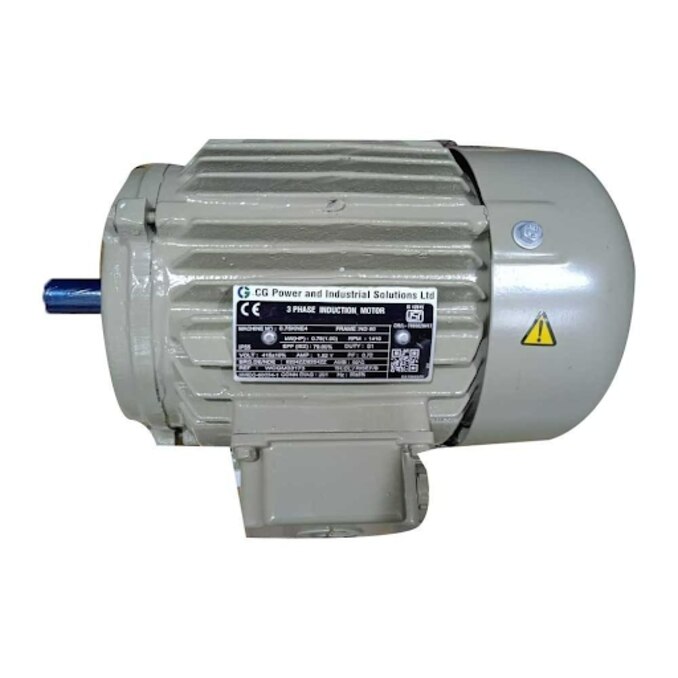
Confirm that the available supply matches the nameplate before ordering a Crompton motor: 415 V 50 Hz, three-phase, terminal connection, rated current, phase sequence and earthing arrangement. A single-phase versus three-phase motor choice is not interchangeable; a three-phase motor needs all phases present and correctly protected.
1. Measure phase-to-phase voltage at the motor terminals, both idle and under load. Investigate imbalance, loose terminals, undersized conductors and single-phasing protection before blaming overheating or nuisance trips; a small voltage imbalance creates disproportionately high rotor heating.
2. Select the starting method from the complete acceleration requirement. Compare direct-on-line current, starting torque, acceleration time and the motor’s locked-rotor current with the supply capacity. A star delta starter reduces starting current, but it also reduces starting torque; loaded conveyors, high-inertia fans and compressors can stall.
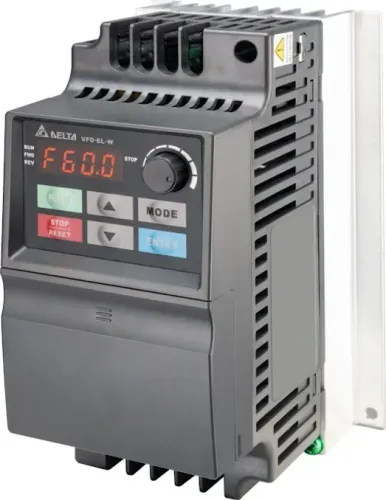
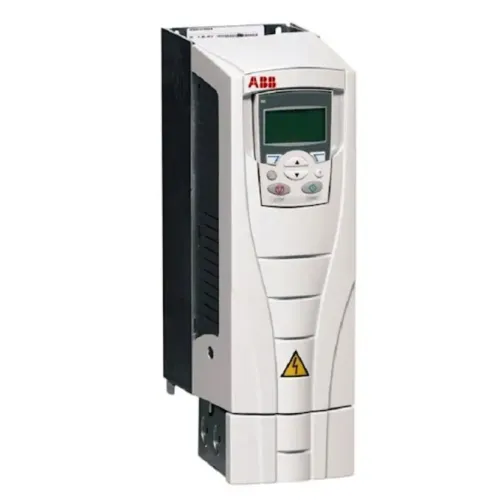
3. If using a VFD, match its normal-duty or heavy-duty output current to the application, not merely the motor kW. Check overload duration, ambient temperature, altitude, switching frequency, enclosure temperature and required starting torque. Constant-torque conveyors and compressors need different drive sizing from centrifugal fans.
4. Confirm the motor is specified for inverter operation. Ask for inverter-duty insulation, maximum motor-cable length, carrier-frequency limit, output reactor or filter requirements and bearing-current mitigation; long cables and fast PWM edges can damage insulation or bearings.
Choose Efficiency and Protection for the Real Operating Profile
Specify efficiency, duty, and enclosure from the machine’s actual operating profile—not from nameplate kW alone. S1 continuous duty suits equipment that runs at a steady load long enough to reach thermal equilibrium. S3 intermittent duty suits repeated load-and-rest cycles; treating an S3 rating as continuous can overheat the motor.
IE2 versus IE3 is a running-cost decision, not simply a label. Compare both at the same rated voltage, frequency, load point and test method under IEC 60034-30-1.
| Class | Energy implication | Selection consequence |
|---|---|---|
| IE2 | Higher losses at the test point | Accept only after checking operating hours, tariff and heat rejection |
| IE3 | Lower losses at the test point | Prefer for long-running or heavily loaded motors where energy savings repay the premium |
Long operating hours and high average load strengthen the case for IE3. A lightly loaded motor, VFD losses, voltage imbalance, poor rewinding or transmission losses can reduce the installation’s actual saving.
Match protection to the site. IP55 resists harmful dust ingress and water jets, but it is not immersion-proof or a corrosion class. Outdoor, coastal, chemical, washdown and dusty locations require decisions on paint, stainless hardware, drain plugs, breathers and enclosure design.
Record starts per hour, load swings and rest intervals before confirming duty. A conveyor with frequent acceleration needs thermal and starting checks beyond its average kW. Over-specifying S1 wastes money; underspecifying duty overheats windings.
Confirm Mounting, Dimensions and Replacement Fitment
A replacement fits only when its mounting pattern, shaft geometry and overall envelope match the machine—not merely because the Crompton motor has the same kW or HP. Measure the installed motor, then compare each figure with the exact manufacturer drawing for the proposed frame.
Record these dimensions before ordering:
- Shaft height from the centreline to the bottom of the feet
- Shaft diameter, extension length, keyway width and keyway depth
- Overall motor length, width, height and terminal-box clearance
- Foot-hole spacing, hole diameter and distance from the shaft centreline
- Flange dimensions, including pilot-register diameter, bolt-circle diameter and fixing-hole pattern
Match the mounting arrangement to the existing machine:
- B3 foot mounting uses base feet and must match the foot-hole pattern and shaft centreline.
- B5 flange mounting locates through a flange pilot and bolts; a close-looking flange can still fail if the register or bolt circle differs.
- B35 mounting combines feet and a flange, so both sets of dimensions must match.
Check the shaft extension against the coupling, pulley or gearbox input. A shaft that is too short leaves inadequate key engagement; one that is too long can bottom out or overload the coupling. Confirm bearing suitability where a belt creates radial pull or a gearbox applies axial force.
Give Perfect Engineering Solutions the motor nameplate, frame size, mounting code and a dimensioned sketch or photographs with measurements. That prevents a same-power replacement from arriving with the wrong shaft height or flange dimensions.
Related products
 | CROMPTON 3-PH MOTOR CROMPTON 5HP 2POLE FOOT MOUNTED MOTOR ₹41078 ⚡ Crompton 5 HP, 2 Pole, IE2, Foot Mounted Induction Motor This is a high-speed, energy-efficient three-phase squirrel cage induction motor from... View product → |
 | MOTOR IE2 MOTOR ₹16692 PERFECT ENGINEERING SOLUTIONS Crompton Single Phase Motors, also known as CG Commercial motors are used in many applications for small industries and... View product → |
Frequently asked questions
How do you calculate the motor power required for an industrial machine?
Use P = T × n ÷ 9550, with torque in N·m, speed in r/min and power in kW. Calculate from the driven shaft under load, then allow for transmission losses and the selected duty.
How do motor pole count and gearbox ratio affect machine speed?
A 2-pole motor runs faster than a 4-pole or 6-pole motor at the same supply frequency. Choose the pole count and gearbox ratio together so the output shaft reaches its required loaded speed.
What should you check before connecting an industrial motor to a VFD?
Confirm the motor’s rated voltage, frequency, current, insulation system, cooling arrangement and permitted speed range against the VFD settings. Check whether the application needs a braking resistor, encoder or forced ventilation.
Which motor protection and efficiency details matter in industrial service?
Check the IE efficiency class, IP enclosure rating, insulation class, temperature rise, service factor and duty rating. Select protection for the actual dust, moisture, washdown and operating-cycle conditions.
How can you confirm that a replacement motor will fit?
Compare frame size, shaft diameter and length, keyway, foot or flange mounting, bolt-hole spacing, overall dimensions and terminal-box position with the existing motor and machine.
Related products
 | Electric Motor ₹25000 Power 3.7 KW Country of Origin Made in India Suitable For Industrial Purpose Poles 6 Body Cast Iron Body Minimum Order Quantity 1 Piece Crompton IE2... View product → |
 | Electric Motor ₹8300 Power < 10 KW Phase Three Phase Horsepower 2 HP Speed 1500 rpm No. View product → |
 | CROMPTON 3-PH MOTOR CROMPTON 150HP 8POLE FOOT MOTOR ₹2192180 Power: 120 HP / 90 kWEfficiency: IE3 (Premium Efficiency, typically ~89-90% at full load)Speed: 8 Pole (approx. View product → |
 | Geared Motor B3 B5 0.37 KW Crompton Greaves Flameproof Motor ₹13500 Power 0.37 KW Horsepower 0.5 HP Speed 3000 rpm No. of Poles 2 Ambient Temperature 45 Mounting Type B3 B5 Voltage 415 Phase 3 Phase Brand Crompton... View product → |